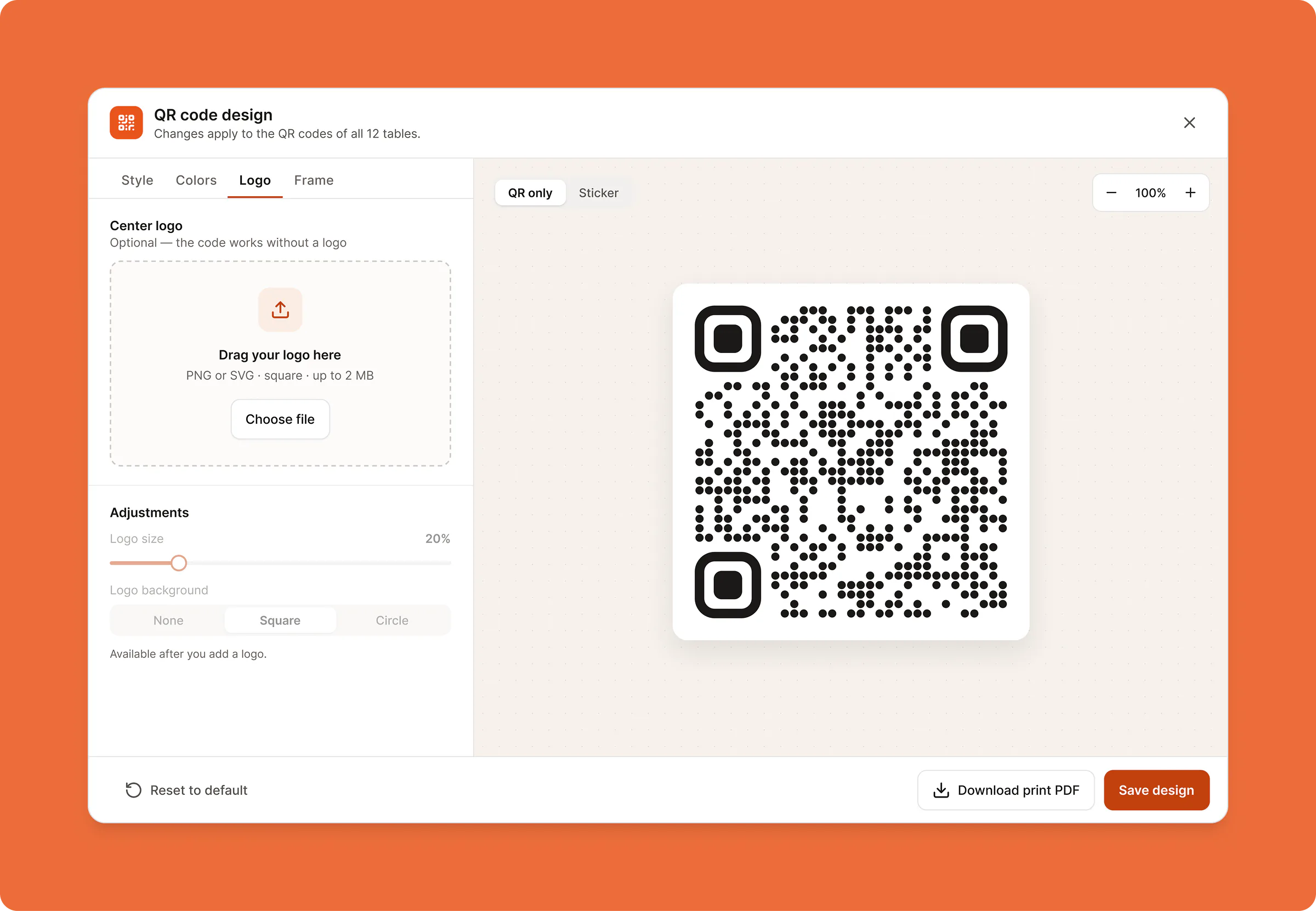
Hermes QR
A lean start-up with rapid feature development and in-field testing, modernizing restaurants with QR ordering.
Challenge
For cafés, bars and restaurants, the time between a guest wanting something and getting it is where revenue is lost. Every order and payment has to be requested in person, so each table’s pace depends on when staff can reach it. Current hospitality solutions are expensive and often require renting additional hardware and training new staff. To cut overhead, many instead combine the cheapest software with pen-and-paper workflows.
For guests, on the other hand, it can be difficult to catch the waiter’s attention, especially during busy hours, so they often resort to walking up to the waiter or waiting at the bar. Paying at the end can be the slowest part of the dining experience.
Solution & Outcome
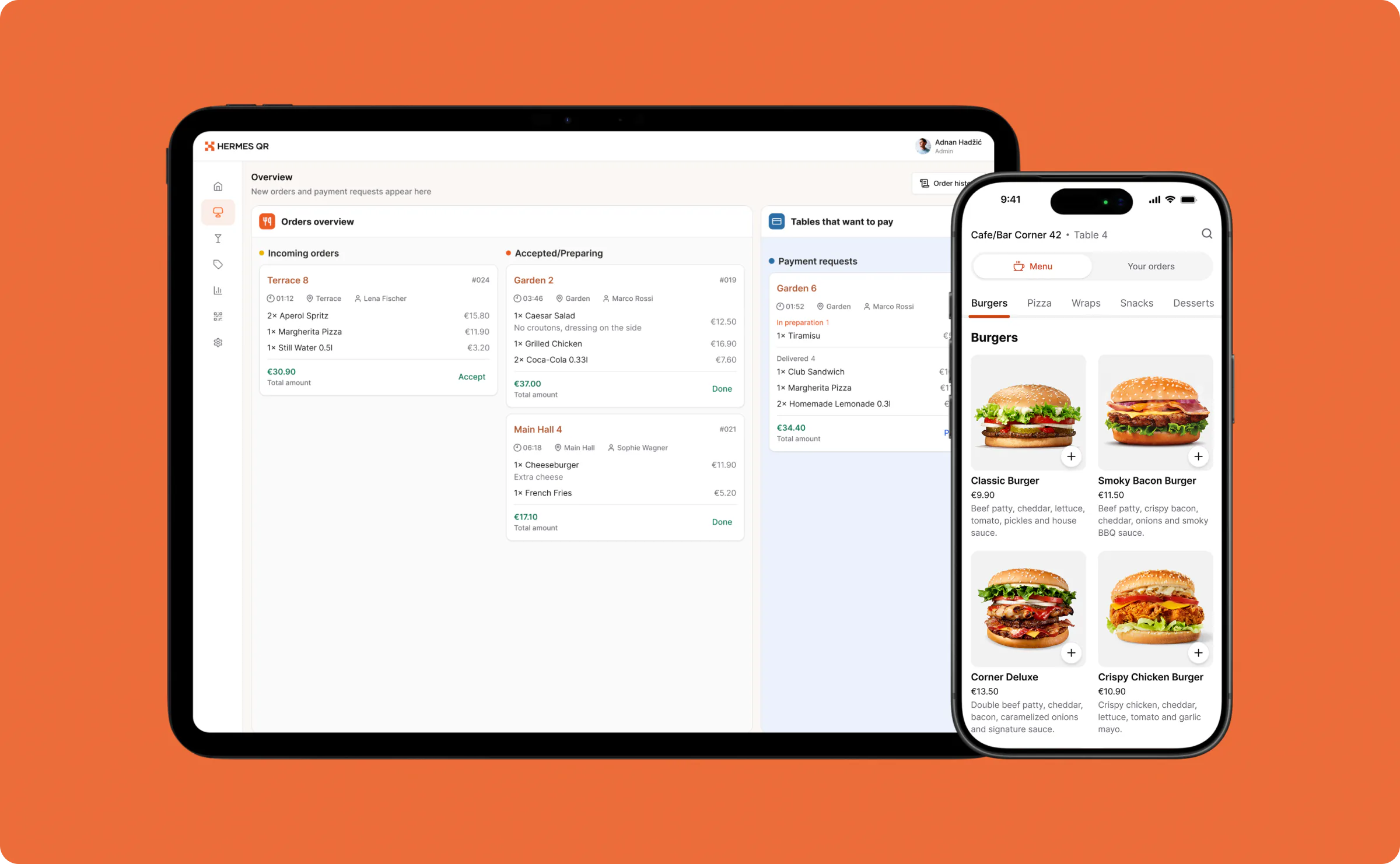
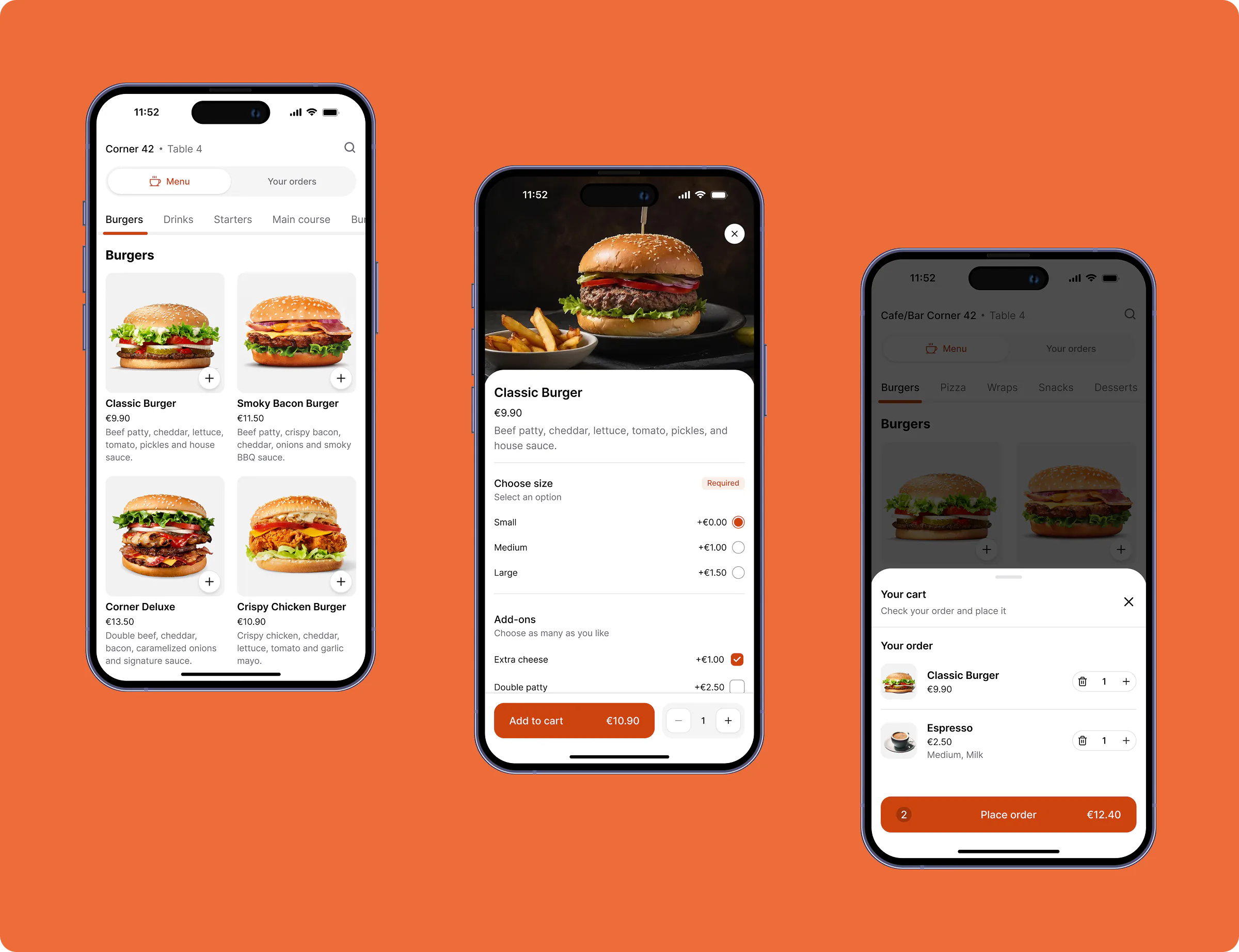
Hermes QR is a digital ordering system that also doubles as a full venue management system. For guests, the experience is akin to ordering takeout through their usual app. They can filter by category or allergens, add special requests, track the status of their order, and request the bill when they are ready.
Staff, on the other hand, have a full overview of every order, can edit the menu and item availability on the fly, create automatic timed promotions, clearly understand what items drive their income, and attract customers.
- Type
- Product design
- Industry
- Hospitality
- Responsibilities
- UI/UX design
- User research
- Project management
- Duration
- 8 months
In smaller establishments, waiters can keep a good overview of the room, but those are the exception. Many establishments have outdoor seating or even multiple floors, making it harder to notice when guests want to order or pay. In some types of establishments, like bars and clubs, waiters must manage large crowds, frequent small orders, and cannot reliably estimate when a table might need them again.
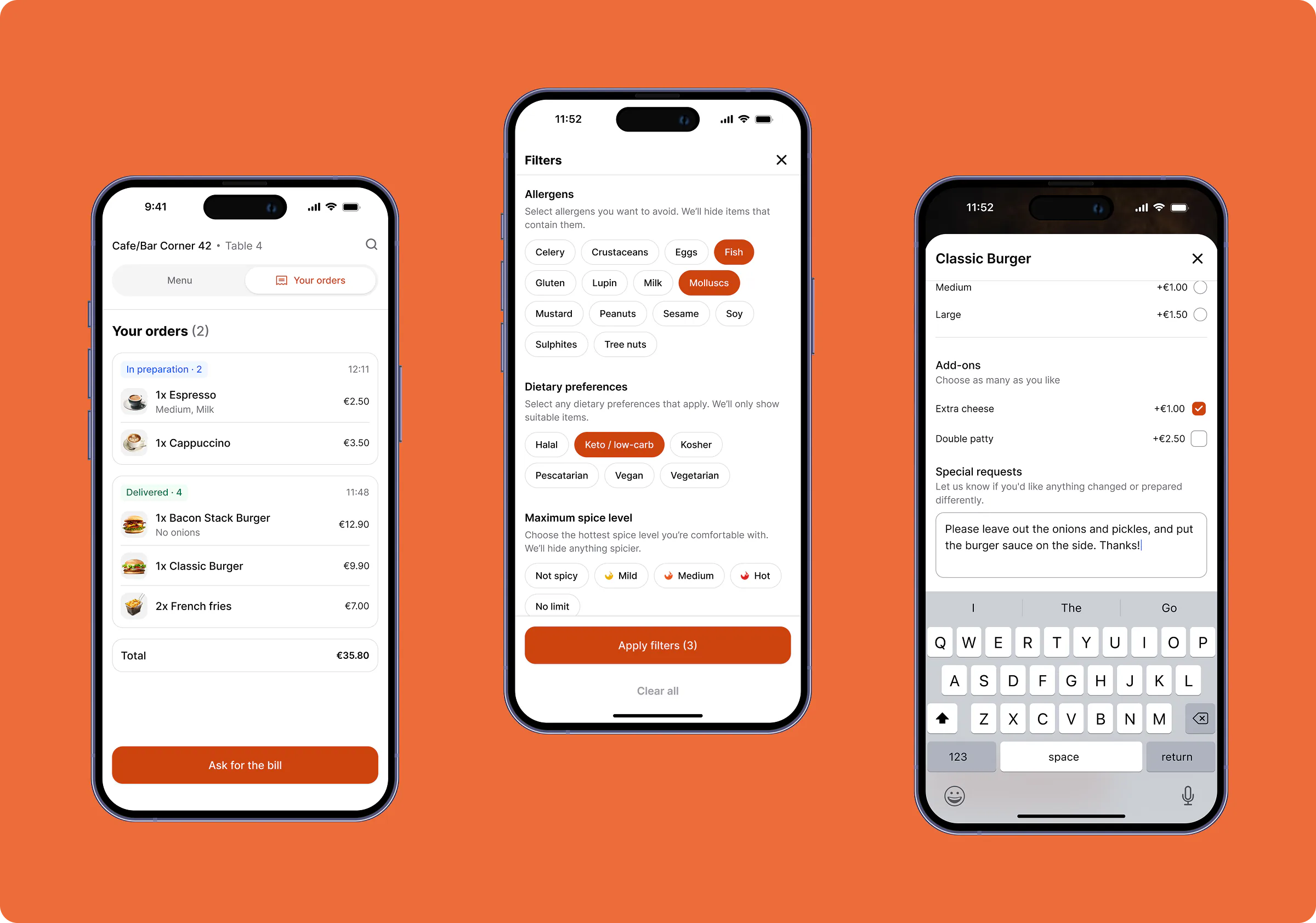
For guests, a lack of agency and information is the most common gripe with the digital menus they normally encounter. I addressed that by making sure that guests have full information about menu items, can always see the status of their orders, can filter the menu to hide options they don’t like, and when sending orders, they can easily write special requests.
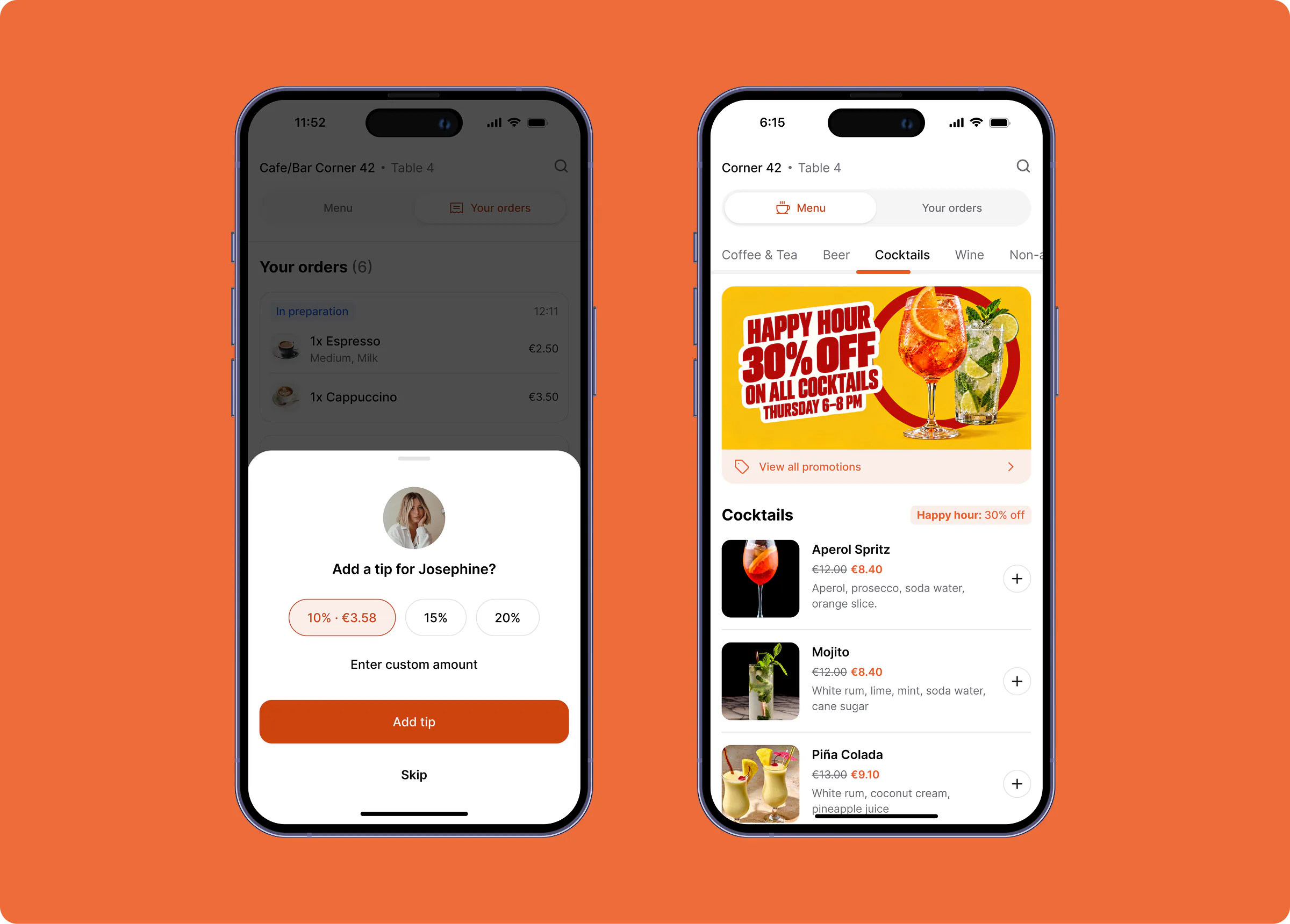
Waiters are the most vital part of the flow. So while designing Hermes QR, I took great care to talk to them often and address their pain points. Their biggest worry was loss of tips, which we addressed by introducing a tipping feature to remind guests of the person who served them. Promotions are also a common pain point. With Hermes QR, timed promotions run automatically, and the system keeps track of new prices, combos, and seasonal menus.
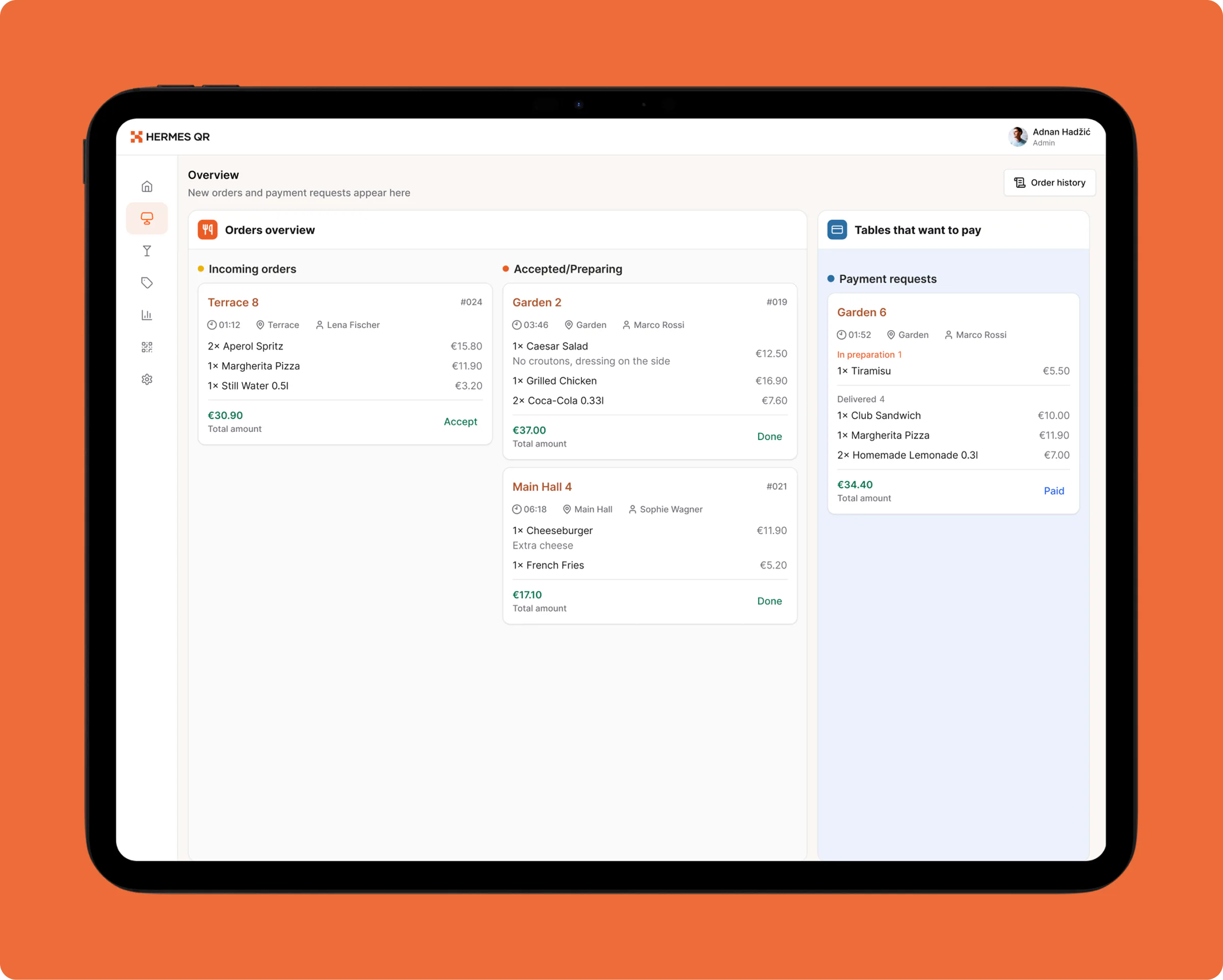
By creating sections and assigning staff to them, each staff member can filter the overview to show only their tables, and only gets notifications when they are involved. To avoid cluttering the overview, we combine multiple independent orders from the same table into a single order for the waiter to tackle.
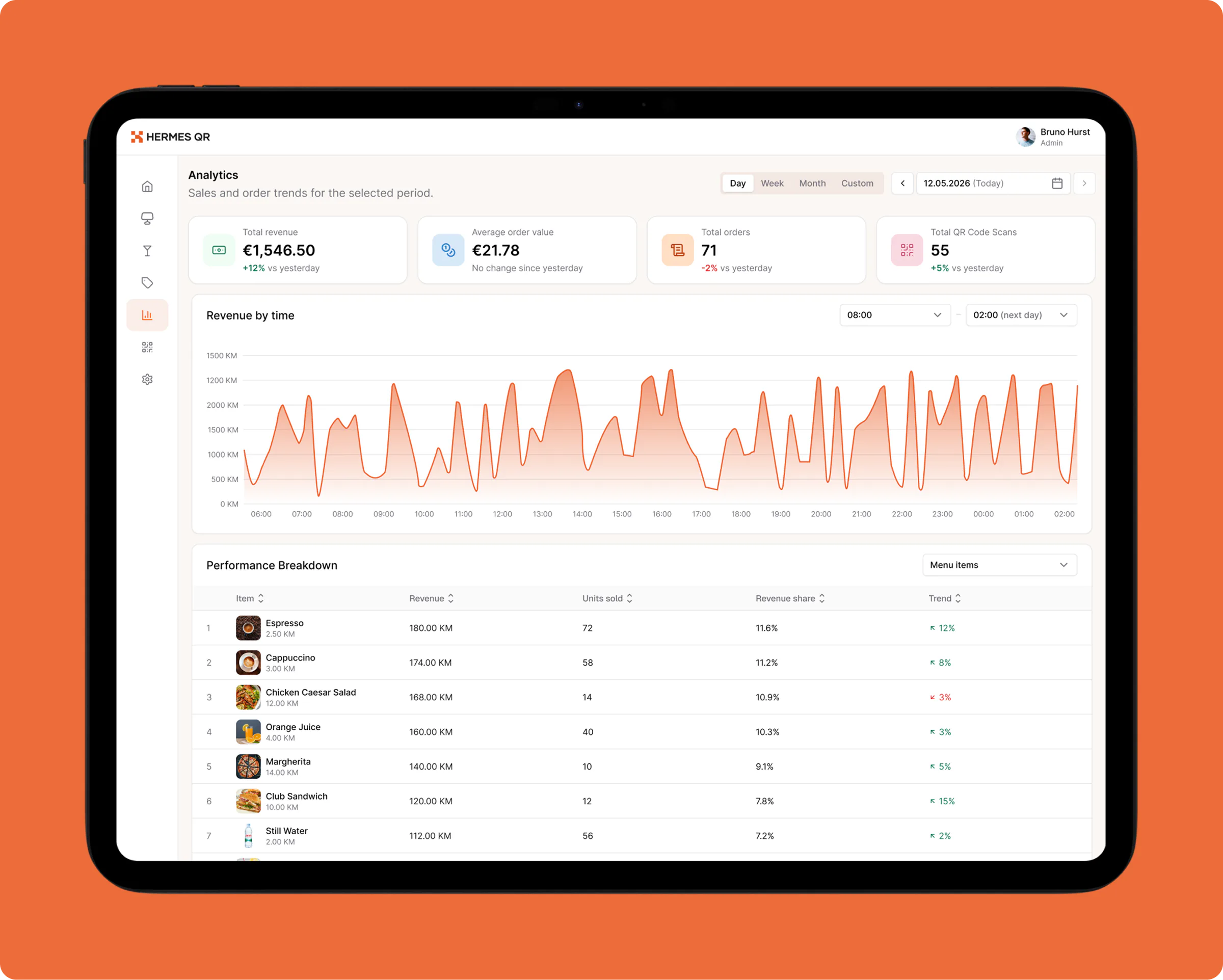
Establishments get a full overview of their operations for any time frame they track. Hermes QR also shows their best-performing items, menu categories, tables and sections, as well as activity over time. By identifying regular gaps, they can run promotions at ideal times or organize shifts according to actual demand.